Short answer: the wrapper is the outer leaf of a cigar, and wrappers are named either for their seed or region (Connecticut, Habano, Corojo, Cameroon, Sumatra, San Andrés) or for their color and processing (Candela, Maduro, Oscuro). Connecticut Shade is the classic mild, golden wrapper; Connecticut Broadleaf and Mexican San Andrés are the classic dark maduro leaves; Habano and Corojo are Cuban-seed wrappers that sources describe as spicy and full-flavored. Darker does not mean stronger: Cigars International says the whole blend sets strength.
Cigar wrapper types at a glance
| Wrapper | Where it's grown | Look | Flavor, as sources describe it |
|---|---|---|---|
| Connecticut Shade | Connecticut River Valley under tents; Ecuador grows Connecticut seed under natural cloud cover | Golden-brown to light tan | Mild, with a subtle aroma (Tobacconist University); cedar, coffee beans, cream and nuts (JR Cigars) |
| Connecticut Broadleaf | Connecticut River Valley, in open sun | Very dark after curing; used on many maduros | Sweet, earthy, pungent (Steve Saka, in Cigar Aficionado) |
| Habano | Cuban seed grown in Ecuador and Nicaragua | Shades of brown; a dark, reddish brown in Ecuador (Cigars International) | Rich and spicy, often with a subtle chocolate note (JR Cigars) |
| Corojo | Descendants of the Cuban seed, grown in Central America and the Caribbean | — | Spicy, peppery and robust (JR Cigars) |
| Cameroon | Cameroon and the Central African Republic, in the sun | Dark brown, often reddish, with visible "tooth" | Richly flavored (Tobacconist University); rich and savory (JR Cigars) |
| Sumatra | Indonesia; Sumatra seed in Ecuador | Varies; Ecuador Sumatra is darker and oily | Cinnamon zest, mild and sweet (JR Cigars); Ecuador Sumatra stronger (Cigar Aficionado) |
| San Andrés | San Andrés Valley, Veracruz, Mexico | Dark; a classic maduro leaf | Sweet, spicy and earthy (Smokingpipes) |
| Maduro | A process, not a place: longer or hotter fermentation | Dark brown | Sweeter, not stronger (Smokingpipes) |
| Oscuro | A color: the darkest grade | Nearly black | — |
| Candela | A process: heat-cured to hold the green | Green | — |
Why the wrapper matters
Cigar Aficionado's glossary defines the wrapper as a high-quality leaf wrapped around the bunch and binder of a handmade cigar, and says wrappers are the most expensive type of tobacco; it adds that the leaves have to be handled with the utmost care to avoid blemishes and tears. JR Cigars explains why: the leaf has to look flawless, which makes it rarer and costlier than any other tobacco.
How much of the taste comes from the wrapper is debated, and none of the sources we found cites a measured figure. JR Cigars puts it at 60% to 90% of a cigar's flavor; cigarmaker Ernesto Perez-Carrillo told a Cigar Aficionado seminar in 2016 that he would say 60%. Treat those as estimates, not measurements.
Shade grown vs. sun grown
Cigar Aficionado defines shade-grown wrapper as leaf grown under a tent, also called tapado; the filtered sunlight makes a thinner, more elastic leaf. Cheesecloth came first, and nylon is now the preferred material. Sun-grown tobacco, in the magazine's words, makes a thicker leaf with thicker veins, darker leaves and fuller flavor.
Connecticut Shade
Shade-grown wrapper started in the Connecticut River Valley, the tobacco region that runs north from Hartford into Massachusetts. The first tents went up in the Poquonock section of Windsor in 1900, Cigar Aficionado reported, at a time when fine Sumatra wrapper was replacing the valley's own leaf, according to ConnecticutHistory.org. A Connecticut Agricultural Experiment Station bulletin calls the station's 1900 crop "the first crop of shaded Sumatra ever raised in the Northern States."
Cigar Aficionado describes the work: seedlings go in the ground in May and reach about nine feet by Independence Day, and leaves are picked three at a time, in primings, from the bottom of the plant up. Theo W. Folz, then head of Consolidated Cigar Corp., told the magazine it is the most expensive, most labor-intensive and most risky type of tobacco to plant. The magazine reported in 2012 that all Connecticut Shade is now grown from what is called Connecticut seed, and that the wrapper on Macanudo's Gold Label is hung for at least 50 days and goes on the cigar without fermentation.
Ecuador Connecticut
Ecuador grows Connecticut seed without tents. Cigar Aficionado's glossary credits a near-continuous cloud cover, and an Oliva Tobacco Co. executive told the magazine in 2000, "You don't need shade here." Cigarmakers have told Cigar Aficionado it is cheaper and more consistent than leaf from Connecticut. Descriptions of the leaf differ: makers quoted by Cigar Aficionado call it thin, delicate and more neutral, while Cigars International calls it thicker and darker, with a richer, creamy, slightly nutty flavor.
Connecticut Broadleaf
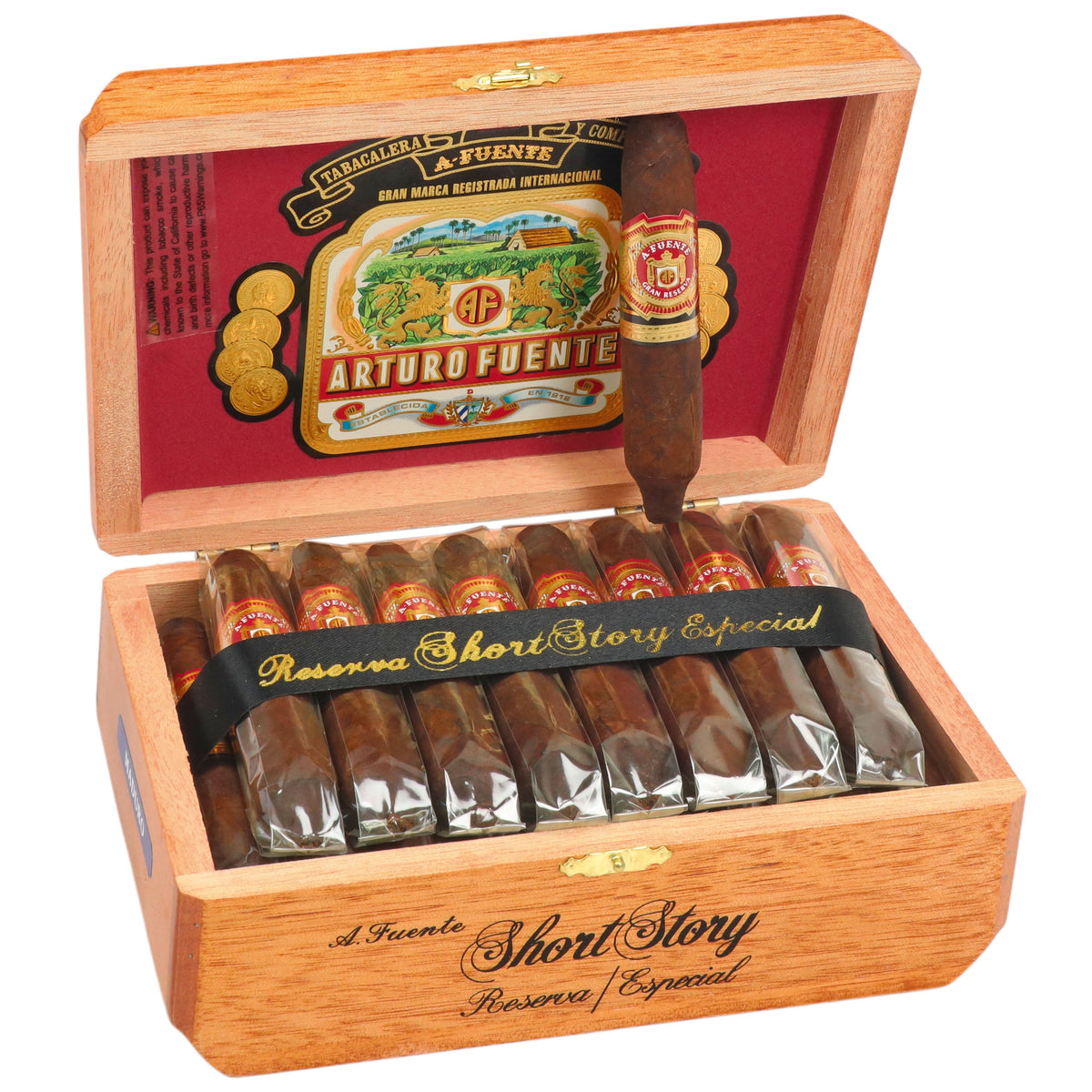
Broadleaf is a different plant, grown in open sun in the same valley. Cigar Aficionado says it is prized for many maduro cigars and turns very dark after curing, and that it is stalk-cut: when it is ready, a worker chops the whole stalk with a hatchet. Steve Saka described its flavor to the magazine as sweet, earthy and pungent. The Hemingway Short Story Maduro is one cigar in our humidor wrapped in Connecticut Broadleaf.
Habano (Cuban seed)
Cuban seed usually means tobacco grown outside Cuba from seed that originated there, and Cigar Aficionado says Cuban-seed tobaccos tend to be full in flavor. In Cuba itself, "Habano" is the term for a cigar made entirely of Cuban tobacco. JR Cigars describes Habano wrapper grown in Ecuador and in Nicaragua. Cigar Aficionado's glossary credits the Oliva Tobacco Co. with bringing Habano seed to Ecuador, where Cigars International says it grows under natural cloud cover and turns a dark, reddish brown. JR Cigars describes Habano's flavor as rich and spicy, often with a subtle chocolate note. Browse Habano cigars.
Corojo
Corojo is named for El Corojo, a farm in Cuba's Vuelta Abajo named after a palm tree on the property. Cigar Aficionado reported in 1995 that the Rodriguez family developed the strain there in the 1930s and '40s. By 2000, the magazine reported, Cuban growers had stopped planting it because it was too susceptible to diseases such as black shank, and most had turned to hybrids including Habanos 2000, Criollo 98 and 99, and Corojo 99. Its glossary says Cuba no longer grows Corojo and that descendants of the seed are grown in Central America and the Caribbean, so today's "Corojo" wrapper comes from that line. JR Cigars describes it as spicy, peppery and robust. Browse Corojo cigars.
Criollo '98
Criollo means "native seed," JR Cigars notes, and Criollo '98 is one of the hybrids Cuba turned to after Corojo, per Cigar Aficionado. JR Cigars says Criollo is grown in Nicaragua's Estelí and Jalapa regions and that Jalapa Criollo has a distinct sweetness.
Cameroon
Cigar Aficionado's glossary describes Cameroon as an African country known for toothy, dark wrapper, and says tobacco from the neighboring Central African Republic is also sold as Cameroon. A 1998 Cigar Aficionado report on CETAC, which grows wrapper in Cameroon and the Central African Republic, said all its tobacco is sun-grown, which is unusual for wrapper, and that it is cultivated and harvested by hand. Tobacconist University describes a dark brown color, often with a reddish tint, and a rich flavor. In our humidor, the Arturo Fuente Hemingway Short Story Natural wears Cameroon, as do the CAO Flavours cigars. Browse Cameroon cigars.
Sumatra
Indonesian Sumatra is a rich wrapper, but Cigar Aficionado reported in 1999 that nearly all of it goes to machine-made cigars in Europe. Sumatra seed also grows in Ecuador, where Cigar Aficionado's glossary describes it as stronger, darker and oily. JR Cigars calls Sumatra usually mild and sweet, with cinnamon zest; the two descriptions show how much growing region and processing matter. The Tatiana cigars we carry are listed with an Indonesian Sumatra wrapper. Browse Sumatra cigars.
San Andrés (Mexico)
San Andrés comes from the San Andrés Valley in Veracruz, Mexico, and its volcanic soil, Smokingpipes notes. It is stalk-cut and hung upside down to cure. Cigar Aficionado's glossary calls it superb maduro leaf used around the cigarmaking world, and a 2020 Cigar Aficionado report described piles of fermenting Mexican leaf reaching 140°F inside. Smokingpipes describes the flavor as a rich, sweet, spicy and earthy mix.
Brazilian wrappers
Brazil grows Mata Fina in the Recôncavo, near its northeastern coast, and Arapiraca, which Cigar Aficionado's glossary calls a very dark, oily leaf. A 2005 Cigar Aficionado report described Mata Fina as medium to strong, with a sweet taste and great aroma, and Arapiraca as a heavier wrapper some makers use for maduros.
Maduro, Oscuro and Candela: wrappers named for color
- Maduro means ripe in Spanish. Tobacconist University says a true maduro wrapper has gone through longer or hotter fermentation; Cigar Aficionado's glossary notes the color can also come from sun exposure or a cooking process, and Smokingpipes says dye is sometimes used to darken a wrapper. Smokingpipes says maduro wrapper is harvested from the top of the plant, a thicker leaf that stands up to the heat of fermentation. Our guide to Maduro vs. Natural cigars goes deeper, and you can browse maduro cigars.
- Oscuro is the blackest shade, darker than maduro, in Cigar Aficionado's definition.
- Candela, or double claro, is green. Cigar Aficionado's glossary says the color comes from heat-curing in the barn that locks in the chlorophyll, and that from about 1958 to the early 1970s nearly all the cigars Americans smoked were candelas; Cigars International notes it was also called American Market Selection.
- Rosado means rose-colored, a term Cigar Aficionado says describes the reddish tint of some Cuban-seed wrapper.
Does a darker wrapper mean a stronger cigar?
No, according to Cigars International, which calls the idea "completely false" and says the entire blend, wrapper, binder and filler, generates a cigar's strength, with the filler doing most of it. JR Cigars puts it as "dark equals flavors, not strength," and Smokingpipes says maduro fermentation makes the wrapper sweeter, not stronger. JR Cigars does make one exception, saying an oscuro wrapper means a stronger smoke.
Shop by wrapper
Connecticut Shade · Habano · Corojo · Cameroon · Sumatra · Maduro · Sun Grown. For shapes, sizes and strength, see our guide to types of cigars.
$9.99 flat shipping, free on orders of $125 or more.
Frequently asked questions
What are the main types of cigar wrappers?
Connecticut Shade, Connecticut Broadleaf, Habano, Corojo, Cameroon, Sumatra and San Andrés are named for seed or region; Candela, Maduro and Oscuro are named for color and processing.
What is the mildest cigar wrapper?
Connecticut Shade is the wrapper most often described as mild: Tobacconist University cites its mild flavor and subtle aroma, and Cigars International calls it mellower in flavor and strength. Strength still depends on the whole blend.
What is a Habano wrapper?
Wrapper grown from Cuban seed outside Cuba, in places such as Ecuador and Nicaragua. JR Cigars describes it as rich and spicy, often with a subtle chocolate note.
What is a Corojo wrapper?
A wrapper descended from the Corojo strain developed in Cuba in the 1930s and '40s. Cuba no longer grows it, per Cigar Aficionado; descendants of the seed are grown in Central America and the Caribbean.
What is the difference between Connecticut Shade and Connecticut Broadleaf?
Shade is grown under tents for a thin, light, mild leaf. Broadleaf is a different plant grown in open sun and stalk-cut; it cures very dark, and Cigar Aficionado says it is prized for many maduros.
Is a maduro wrapper stronger?
Not necessarily. Cigars International calls the idea that darker means stronger "completely false," JR Cigars says "dark equals flavors, not strength," and Smokingpipes says maduro fermentation makes the wrapper sweeter, not stronger.
How much of a cigar's flavor comes from the wrapper?
Estimates vary, and none we found cites a measurement: JR Cigars says 60% to 90%, and cigarmaker Ernesto Perez-Carrillo has said about 60%.
What is a Cameroon wrapper?
A sun-grown African wrapper, toothy and dark with a reddish tint, that Tobacconist University describes as richly flavored. Tobacco from the neighboring Central African Republic is also sold as Cameroon.
What is a Candela wrapper?
A green wrapper whose color is set by heat-curing in the barn. From about 1958 to the early 1970s, nearly all the cigars Americans smoked were candelas, per Cigar Aficionado.
Why is the wrapper the most expensive part of a cigar?
It has to look flawless, which makes it rarer and costlier than other tobacco, JR Cigars says; Cigar Aficionado's glossary calls wrappers the most expensive type of tobacco.
Sources: Cigar Aficionado glossary ("Wrapper," "Shade-Grown," "Sun-Grown," "Connecticut River Valley," "Connecticut Broadleaf," "Ecuador," "Cuban Seed," "Habano," "Corojo," "Cameroon," "San Andres Negro," "Maduro," "Oscuro," "Candela," "Rosado," "Arapiraca," "Mata Fina"); Cigar Aficionado, James Suckling, "Cuba's Best Wrapper" (Summer 1995), "C'est l'Afrique" (January/February 1998), "Tobacco Mecca" (January/February 1999) and "The Death of El Corojo" (July/August 2000); David Savona, "Made in the Shade" (November/December 1999), "Ecuador, Land of Fire" (March/April 2000) and "Talking Broadleaf With Steve Saka" (September 2012); Victoria Shorr, "The Cigar From Brazil" (September/October 2005); Gregory Mottola, "Secrets of Connecticut Shade" (January/February 2012) and "Anatomy of a Cigar" seminar report (November 2016); Andrew Nagy, "Shade in the Dusk" (November/December 2019); Gordon Mott, "Black Gold" (May/June 2020); Connecticut Agricultural Experiment Station, E. H. Jenkins, "The Growing of Tobacco Under Shade in Connecticut," Bulletin 137 (1902); ConnecticutHistory.org (August 2019); Tobacconist University; JR Cigars Blending Room (2015, 2019, 2020, 2023); Cigars International, Cigar 101; Smokingpipes, "50 Shades of Maduro" (June 2015) and "Mexican San Andrés Cigars" (June 2020).