Short answer: a tupperdor is an airtight plastic food container used as a humidor. Wash it, air out the plastic smell, add Boveda 69% packs (one Size 60 for every 25 cigars the container can hold, per Boveda), put in a digital hygrometer, and keep it somewhere cool and out of the sun. The plastic itself needs no seasoning. A coolidor is the same idea built in a picnic cooler, for bigger collections and whole boxes.
What is a tupperdor?
Cigar Place defines a tupperdor as any hard plastic container with an airtight seal that is used as a humidor, and says the name comes from the Tupperware-brand containers people first used. Boveda calls it a humidor for cigars on a beer budget: any clean plastic food container with a tight-fitting lid, plus humidity control. The Manual describes tupperdors as handy for overflow, as a temporary stand-in for a humidor, or for travel.
A coolidor (also spelled coolerdor or cooler-dor) is a cooler set up the same way. Cigar Dojo defines it as a cooler modified to store cigars at the right relative humidity, and Cigars International calls it an economical way to store a larger number of cigars. Bespoke Unit notes that in a coolidor most cigars stay in their original boxes, which protects them from knocks and bumps.
Tupperdor or humidor?
| Tupperdor | Wood humidor | |
|---|---|---|
| Seal | Airtight, if you pick the right lid | Depends on the build; Boveda says drafty humidors reduce a pack's accuracy |
| Seasoning | None for the plastic (Cigar Place, Bespoke Unit); season any cedar you add | Spanish cedar needs seasoning before use; Boveda makes an 84% pack for it |
| Boveda pack life | Boveda says 6 to 9 months in an airtight humidor, but still recommends replacing every 3 months | Boveda says about 3 months in a wooden humidor |
| Boveda level | 69% (Boveda) | 69%, or 72% for drafty humidors and dry rooms (Boveda) |
| Look and aroma | Plain plastic; cedar sheets optional | Cedar-lined furniture |
Boveda says cedar strips in a tupperdor are fine, but in its view plastic is no substitute for the experience of storing cigars in a wood humidor. On pack life, Boveda expects a pack to last about 3 months in a wooden humidor and 6 to 9 months in an airtight one. Even so, it recommends replacing any pack in use every three months so protection doesn't lapse. Cigars International adds that a pack that has turned hard and stiff is due for replacement.
How to make a tupperdor, step by step
1. Pick the container
- An airtight seal comes first. Bespoke Unit says the container must seal airtight; Boveda asks for a tight-fitting lid.
- Food-grade plastic. Cigar Place recommends BPA-free, food-grade plastic. Bespoke Unit warns that older plastic containers may contain BPA or phthalates.
- Rectangular, and sized to the collection. Cigar Place says rectangular shapes are more practical than round ones and suggests a container that is about 70 to 80% full once the cigars and packs are in. Too little space can make the humidity swing, it says, and too much leaves gaps.
- Brands people use. Cigar Place lists Rubbermaid, Gladware, Lock & Lock, The Container Store and Ziploc. Bespoke Unit's tupperdor guide reviews Sistema and Komax containers, and its coolidor guide adds an Iris USA storage box.
- Clear or opaque. Bespoke Unit points out that clear containers expose cigars to UV light, so keep a clear one somewhere dark, or choose an opaque one.
- Use a clean, dedicated container. Cigar Place says old food containers can retain odors or residues that may transfer to cigars.
2. Get rid of the plastic smell
New plastic often smells. Bespoke Unit leaves the container fully open outside or in a well-ventilated room for at least 24 hours, and Cigars International washes a cooler with dish soap and water, then leaves the lid open for several days. Bespoke Unit's rule is simple: as long as the smell is there, keep the cigars out.
3. Add humidity control
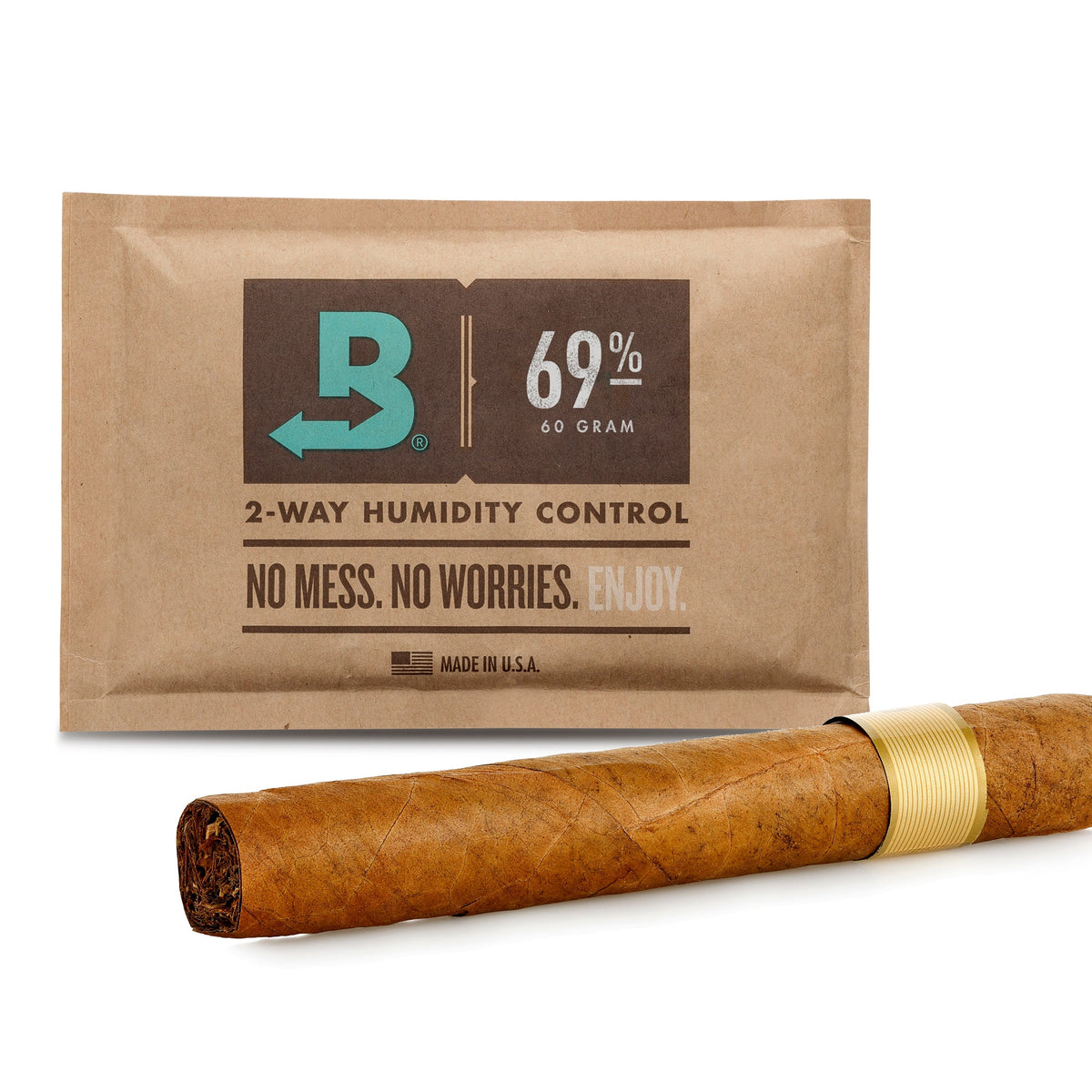
- Use Boveda 69%. Boveda recommends 69% for airtight storage, naming tupperdors, humidor bags, polymer travel humidors and acrylic humidors. It suggests trying 65% if your cigars smoke over-humidified; its tupperdor article aims that tip at humid climates, and its RH chart describes 65% as a drier, easier-burning profile.
- Don't use 75% in a tupperdor. Boveda aims 75% at extremely dry conditions such as deserts, but says not to use it in airtight containers like tupperdors and humidor bags.
- Size the packs to capacity. Boveda's rule is one Size 60 for every 25 cigars the container can hold, one Size 320 for every 100, or one Size 8 for every 5. Count what the container can hold, not what is in it today. Food containers aren't rated in cigars, so Boveda's volume rule helps: allow one Size 60 for roughly every 72 to 100 cubic inches of inside space, rounding up. Boveda says using more packs than the chart suggests is fine; Cigar Place warns that too many packs can cause swings, but we follow Boveda's own guidance.
- One level per container. Boveda and Cigars International both say not to mix RH levels in the same storage.
- Packs can touch the cigars. Boveda says its packs are safe in direct contact with cigars.
4. Add Spanish cedar, if you like
Cedar is optional. Boveda says to go ahead and slip Spanish cedar strips into a tupperdor. Cigar Place says cedar can absorb subtle humidity swings and add a pleasant aroma, but isn't required in a well-sealed container with quality humidity packs; for aroma, it says a sheet or two is enough. Bespoke Unit says to season the cedar before it touches cigars. Cigars International's cooler guide asks for Spanish cedar specifically, in capital letters: do not buy white cedar.
5. Put in a digital hygrometer
Cigar Place suggests a digital hygrometer to keep an eye on the reading, and Bespoke Unit says to avoid analog ones, which are rarely accurate enough. Check it against a known reference. Boveda's calibration kit sits with the hygrometer for at least 24 hours at 65 to 75°F, and Boveda says to recalibrate every six months. The salt test, which Cigars International says holds a sealed bag at 75%, is cheaper, but Boveda says a homemade salt test won't give a precise reading. See our hygrometer guide for how one works.
6. Let it settle, then load it
Cigar Place lets a sealed tupperdor sit with its packs for at least 24 to 48 hours before adding cigars. Then check it every few weeks; Cigar Place says that is enough for most tupperdors. Cigar Place adds that frequent opening can let humidity escape, so open the lid only when you're adding or removing cigars.
Where to keep it
Cool, dark and steady. Cigar Place says to keep a tupperdor out of direct sunlight and away from heat sources, and Bespoke Unit points out that plastic is not insulated, so the contents can heat up. Heat matters because of tobacco beetles: Cigar Aficionado says beetle larvae hatch above 72°F and 72% humidity, JR Cigars puts it at around 74° and 75%, and Cigars International says to keep a humidor at no more than 70 degrees. Our guide to cigar mold, plume and tobacco beetles covers the signs.
In a desert climate. Northwoods Humidors notes that the desert Southwest is far drier than places like the Florida Everglades. A good seal helps here. Bespoke Unit says a quality tupperdor offers a real airtight seal where wooden humidors commonly lose moisture, though Northwoods cautions that very dry air can challenge any humidor, however airtight. Our suggestion for Yuma: Boveda 69% in a well-sealed container, kept indoors at room temperature, and never in a hot garage or car in summer.
What not to do
- Don't rely on a food storage bag. Boveda says a food bag isn't airtight and lets odors through; it will do in a pinch but isn't suited to long-term storage.
- Skip the sponge. Bespoke Unit says a sponge won't work because it can only release moisture, while a Boveda pack also absorbs extra humidity. Cigars International's cooler-dor guide does use floral foam or a sponge soaked in a 50/50 mix of water and propylene glycol, so the sources differ. Boveda says never to mix its packs with other humidification products such as sponges, gels, crystals or beads, and we stick with two-way packs.
- No tap water. If you do use a humidifier that needs filling, JR Cigars says never to use tap water, because its minerals can damage the leaf or cause mold, and Northwoods says it can leave mineral deposits.
- Don't overfill it. Cigar Place says packing too many cigars into one container can keep air from circulating properly.
- Don't put a half-smoked cigar back in. Boveda says not to store a once-lit cigar in a humidor, tupperdor or humidor bag. See how to put out a cigar instead.
- Keep infused cigars apart. Our suggestion: flavored and infused cigars, such as Acid or Tabak Especial, get their own container so their aroma stays off your other cigars.
The coolidor: a tupperdor for a whole collection
A cooler holds far more. Cigars International says a 56-quart cooler is the most popular size and suggests putting loose cigars in empty cigar boxes inside it. Cigar Dojo says to buy a new cooler, because a used one risks bacteria and mold, and to clean out the plastic smell before any cigars go in. Bespoke Unit says a cooler offers better insulation in particularly hot climates, at the cost of being heavier and more awkward to store, and that if a coolidor isn't airtight, the humidity escapes.
For humidity, Boveda lists both the Size 60 and the Size 320 for coolerdors, at one Size 60 per 25 cigars of capacity or one Size 320 per 100. Cigar Dojo's build uses humidity beads rather than Boveda packs; it calls about 65% and 68°F good starting numbers and says cigars should generally stay under 70°F and never go over 80°F.
Boveda packs for a tupperdor
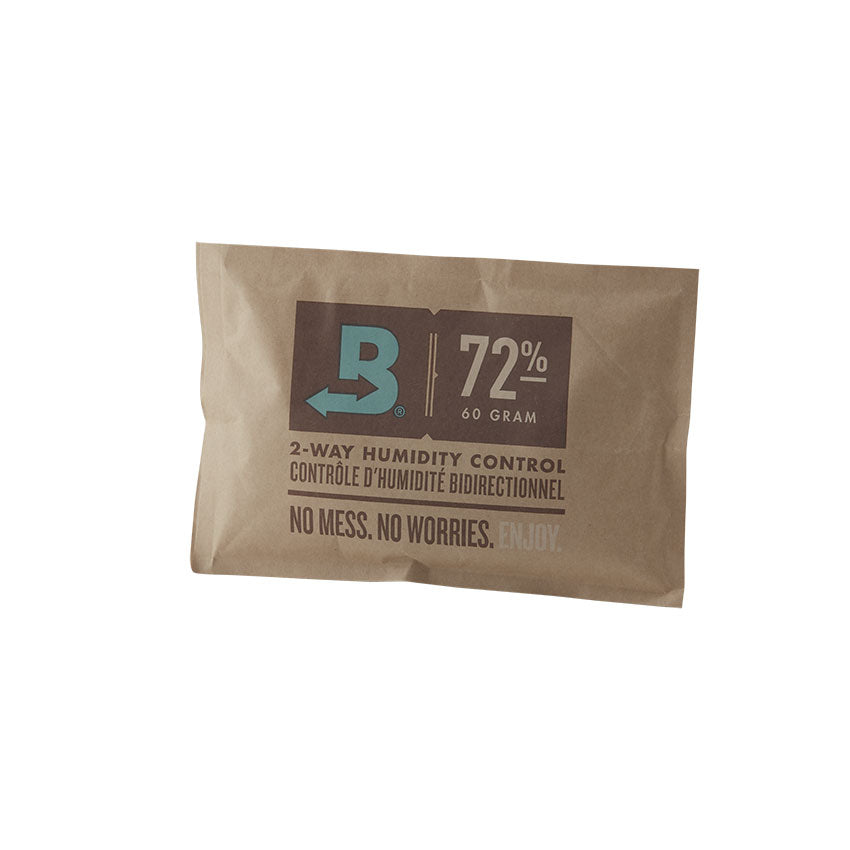
We stock Boveda Pack 69%, the Size 60 Boveda recommends for airtight containers, one pack per 25 cigars of capacity. For wood humidors in dry rooms there is Boveda Pack 72%, and for small non-plastic travel cases the Boveda 8 Gram 72%, one per five cigars (for plastic travel humidors, Boveda points to 69%). Every cigar order from our humidor ships with a Boveda pack. Browse Boveda and humidification, cigar humidors and cigar cases and travel humidors, and read how Boveda packs work and how to store cigars. If your cigars have already dried out, see how to rehydrate cigars.
$9.99 flat shipping, free on orders of $125 or more.
Frequently asked questions
What is a tupperdor?
An airtight plastic food container used as a humidor, with humidity packs inside. Cigar Place says the name comes from the Tupperware-brand containers people first used.
Do tupperdors work?
Yes, if the container seals airtight and the humidity control is sized correctly. Boveda recommends its 69% packs for tupperdors and says a pack in airtight storage lasts longer than one in a wooden humidor.
Do you need to season a tupperdor?
Not the plastic. Cigar Place and Bespoke Unit say a plastic container needs no seasoning; Bespoke Unit says to season any Spanish cedar you put inside.
What Boveda should I use in a tupperdor?
Boveda recommends 69% for tupperdors and other airtight containers, and says not to use 75% in them. It suggests trying 65% for a drier cigar, especially in humid climates.
How many Boveda packs does a tupperdor need?
One Size 60 for every 25 cigars the container can hold, or one Size 320 for every 100, per Boveda. Boveda says using more than the chart suggests is fine.
Should I put cedar in a tupperdor?
It's optional. Boveda says Spanish cedar strips are fine, and Cigar Place says cedar can buffer subtle humidity swings and add aroma, though it isn't required with quality humidity packs. Use Spanish cedar, not white cedar.
How do you get the plastic smell out of a tupperdor?
Wash it and air it out. Bespoke Unit leaves it open for at least 24 hours; Cigars International's cooler guide washes the cooler with dish soap and water and leaves the lid open for several days. Keep cigars out until the smell is gone.
Can you put cigar boxes in a tupperdor?
Yes, if they fit. Asked about boxed cigars in a Sistema tupperdor, Bespoke Unit said it would leave them in the box for extra protection.
What is a coolidor?
A cooler set up as a humidor, for larger collections. Cigars International says a 56-quart cooler is the most popular size.
Where should I keep a tupperdor?
Somewhere cool and dark. Cigar Place says to keep it out of direct sunlight and away from heat sources, and Cigar Aficionado says tobacco beetle larvae hatch above 72°F and 72% humidity.
Sources: Boveda, "What Boveda Should I Use in a Tupperdor?" (September 2022), "Why Food Bags Aren't for Cigars" (June 2021), "Can You Save a Cigar for Later & How?" (May 2024), "How Long Does Boveda Last for Cigars and Tobacco?", "How Many Boveda Packets Do I Use in My Humidor or Cigar Storage?", and help-center pages on pack size, RH levels, finding a humidor's capacity, mixing with other humidification products, contact with cigars and salt tests, plus its calibration kit instructions; Cigar Place, "How to Make a Cigar Tupperdor (DIY Homemade Humidor)"; Bespoke Unit, tupperdor (updated February 2023) and coolidor (October 2022) guides; The Manual, "Just What Is a Tupperdor Anyway? Understanding the Affordable Humidor Alternative"; Cigar Dojo, coolidor tip (July 2013); Cigars International, "Making a Cooler-dor," "How to Use Boveda Humidity Packets," "How to Calibrate a Hygrometer" and "Tobacco Beetles"; JR Cigars, "Cigar Humidor Maintenance" (May 2019) and "How to Spot Tobacco Beetles" (October 2019); Northwoods Humidors, "Cigar Storage: Why Where You Live Matters" (February 2024) and "How to Season a Humidor: Essential Tips" (April 2018); Cigar Aficionado, "Fighting Tobacco Beetles" (July 2000).