Short answer: plume, also called bloom, is a fine white powder that Cigar Aficionado says brushes off without leaving a mark and is not harmful for your cigars. Mold is fuzzy or raised, can be white, blue, green or another color, can smell musty and leaves a stain when you brush it. Cigar Aficionado says a cigar with mold on its foot should not be smoked, and Boveda and Holt's both say to throw out any cigar with mold. Tiny round holes in the wrapper mean tobacco beetles, and the usual remedy is three days in the freezer.
Plume or mold? How to tell
| Check | Plume (bloom) | Mold |
|---|---|---|
| Color | White or light gray specks (Holt's); Cigar World says plume is only ever white | White, blue, bluish-green, green, gray, yellow or black (Boveda, Holt's, Cigar Advisor); Boveda says it is commonly white and fuzzy |
| Texture | A fine powder of tiny crystals that can shimmer in the light (Cigar Aficionado, Cigar Advisor) | Fuzzy, velvety or fibrous, and raised off the leaf like miniature cotton balls (Holt's, Cigar Advisor) |
| Brush it | Comes off without a mark (Cigar Aficionado) | Leaves a stain on the wrapper (Cigar Aficionado) |
| Smell | — | Musty (Holt's, Cigar Advisor) |
| The foot | Cigar Advisor says plume does not grow on the foot | Can grow on the foot and inside the filler (Cigar Advisor) |
| Harmful? | Not harmful for your cigars (Cigar Aficionado, Vigilant) | Boveda says not to smoke it, and Cigar Advisor notes that some molds can act as pathogens in the body |
Don't go by color alone. Boveda says mold is commonly white and fuzzy, so a white spot can still be mold. Check the texture, brush it gently and look at the foot. Our advice: if you still aren't sure, treat it as mold.
Is plume a good sign?
Holt's and Cigar Advisor both describe plume as a sign of good aging; Cigar Advisor says plume indicates that your cigars are aging well. Not everyone agrees. Bespoke Unit calls plume largely a myth, says it is never produced by oils and argues that mold is more often white. Cigar Aficionado's glossary calls plume a naturally occurring part of the aging process and says it is not harmful for your cigars, without calling it a sign of quality.
What causes mold on cigars?
Too much humidity, especially with warmth. Cigar Aficionado says mold is frequently caused by high temperature and humidity, and its glossary points to cigars stored too warm. Where the danger starts depends on whom you ask:
| Source | Where mold risk starts |
|---|---|
| Cigar Advisor (2016) | Above 70% relative humidity (RH); at 80%, mold is nearly certain |
| Boveda (2024) | Above 72% RH |
| Holt's (2022) | Above 72% and 72°F in a tightly sealed humidor |
| Cigar Advisor (2013) | 75% RH and up, made worse at 72°F and up |
| JR Cigars (2022) | Above 75% RH |
| Vigilant | Above 80% RH |
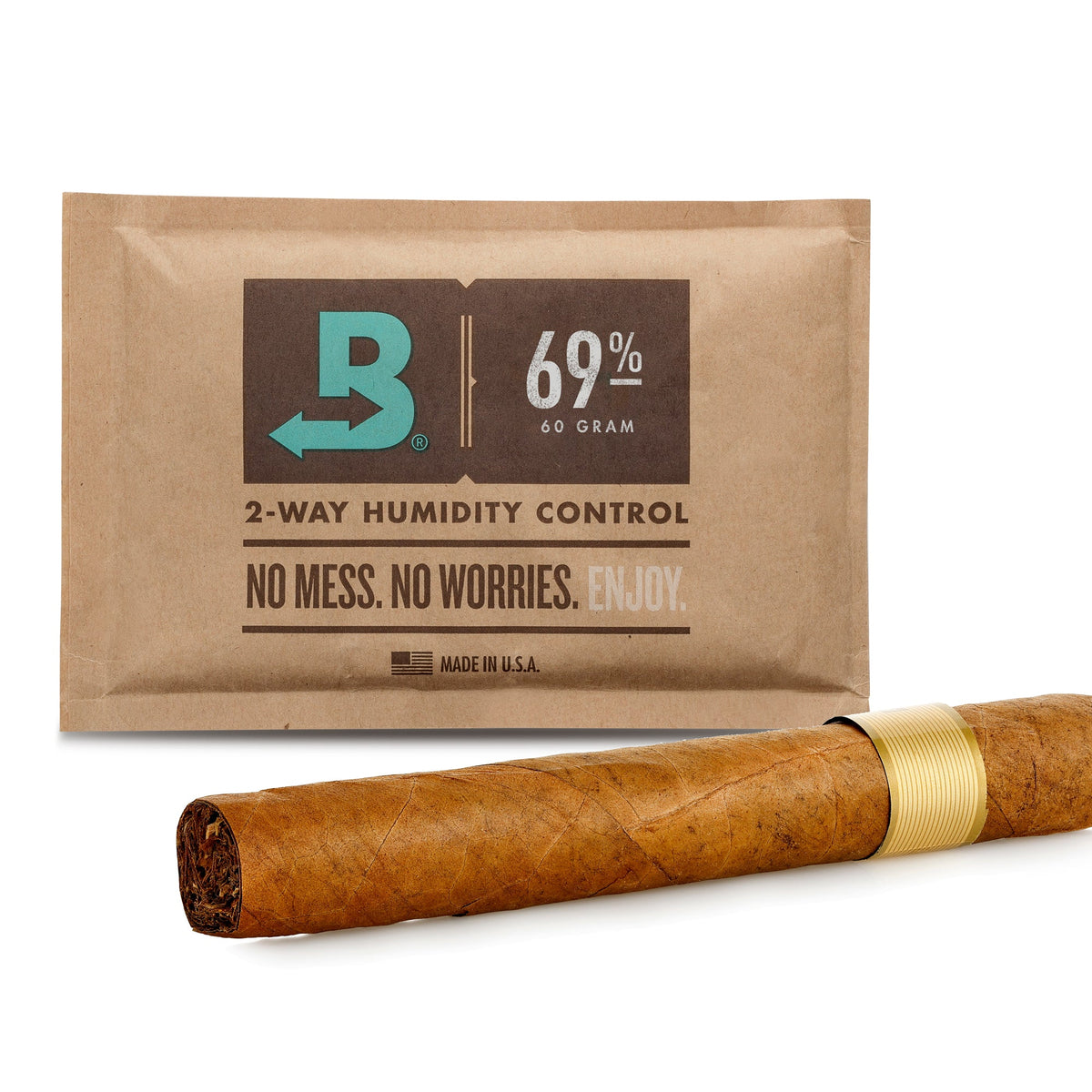
Cigar World adds that tap water is one of the most common causes of cigar mold; Holt's and JR Cigars use distilled water when re-seasoning a humidor. For a target, Cigar Aficionado recommends about 70°F and 70% humidity, Holt's calls 70/70 ideal and 62% to 72% acceptable, and Boveda puts the ideal range at 65% to 72% RH and recommends 69% for most environments and first-time buyers. Our cigar storage guide covers humidity and humidors in full.
What to do if your cigars have mold
- Take every cigar out. Cigar Advisor warns that spores spread from cigar to cigar and can survive on one without being noticed.
- Throw out the moldy ones. Boveda calls mold irreversible, and Holt's says to toss any cigar with mold on it, even a trace. Cigar Aficionado says cigars with mold on their feet should not be smoked. Cigar Advisor says that, according to some sources, light white mold can be wiped off with alcohol and the cigars then frozen, but says to toss any cigar with green or blue mold or with mold in the foot.
- Quarantine the rest. Holt's suggests keeping the cigars that look clean in a separate sealed container and watching them for a few weeks.
- Clean the humidor. Holt's method: sand the affected wood lightly with #150-grit sandpaper, wipe it with isopropyl alcohol without soaking the wood, wipe it again with distilled water, let it dry for about a day, re-season it to about 70% RH and wait at least two weeks before restocking. JR Cigars recommends a high-concentration isopropyl, such as 91%, and Cigar Advisor and Cigar World suggest baking soda for lingering odor.
- Replace the humidifier. Holt's suggests replacing the humidification unit and starting with a new one.
- Fix the cause. Check your hygrometer and bring the humidity back into range. Our humidor guide covers seasoning and calibration.
Tobacco beetles
The tobacco beetle, Lasioderma serricorne, is also called the cigarette beetle, and the University of Florida's Institute of Food and Agricultural Sciences calls it the most damaging pest of stored tobacco. Clemson University's extension puts adults at about ⅛ inch long.
Signs of tobacco beetles
- A tiny, perfectly round hole in the cigar (Cigar Aficionado); Holt's says the holes are usually about the size of a pinhole
- Little tunnels or canals in the cigar (Cigar Aficionado)
- Loose tobacco dust around the cigars (Cigar Aficionado, Holt's)
When do tobacco beetles hatch?
Cigar Aficionado says beetle eggs hatch when the temperature inside a humidor rises above 72°F, and its 2000 article pairs that with humidity above 72%. Tobacconist University puts the line at about 73°F, and halfwheel cites the same figure from Stogie Fresh. The University of Florida says eggs hatch in 6 to 10 days, and that the beetle's development is incomplete at 62.6°F (17°C); Clemson says adults fly above 65°F. For the humidor, Cigar Aficionado recommends about 70°F, Holt's and Cigars International say not to go above 70°F, and Tobacconist University says to keep it under 73°F. In a Yuma summer, our advice is an air-conditioned room, out of direct sun and away from windows and the vents themselves.
How to kill tobacco beetles: freeze the cigars
- Bag the cigars. Use sturdy resealable freezer bags; JR Cigars double-bags. Tobacconist University warns that beetles can eat through cellophane and thin plastic wrap.
- Chill first (optional). JR Cigars puts the bags in the refrigerator for 24 hours before freezing and halfwheel for 48 hours; Holt's suggests a few hours and Cigar Advisor four hours, to ease the change in temperature.
- Freeze for three days. Cigar Aficionado, Holt's, JR Cigars, Tobacconist University and Cigars International all use three days, and halfwheel says at least 72 hours.
- Move them to the refrigerator for a day. Cigar Aficionado, Holt's and Cigars International all say one day; Tobacconist University says at least 24 hours.
- Bring them back slowly. Holt's leaves the cigars at room temperature for a day before they go back in the humidor, and Cigar Aficionado says to let them rehumidify slowly.
| Source | Freezer time |
|---|---|
| Cigar Aficionado (2000, 2010) | 3 days, then 1 day in the refrigerator |
| Holt's (2018) | 3 days, then 1 day in the refrigerator |
| JR Cigars (2015) | 24 hours in the refrigerator, 3 days frozen, 24 hours in the refrigerator |
| Tobacconist University | 3 days at 1°F or lower, then at least 24 hours in the refrigerator |
| halfwheel | 48 hours in the refrigerator, at least 72 hours frozen, 48 hours in the refrigerator |
| Cigar Advisor (2022) | At least 8 hours, with 24 to 36 hours recommended |
Tobacconist University is the only one of these sources to give a freezer temperature. Cigar Aficionado's advice is to freeze every cigar from that humidor, not just the ones with holes. While the cigars are frozen, Cigar Aficionado's 2000 article says to wipe the empty humidor with a damp cloth and not to use any cleaner or disinfectant.
Cigar molds: the other kind
A cigar mold is also a tool. Cigar Aficionado's glossary describes it as a form with slots that cigar makers use to give shape to a finished bunch. Molds were traditionally made of wood and are now often plastic, and bunches are usually pressed for 30 to 45 minutes, with the mold given a quarter turn at intervals. More cigar-making terms are in our cigar glossary.
How we store and ship
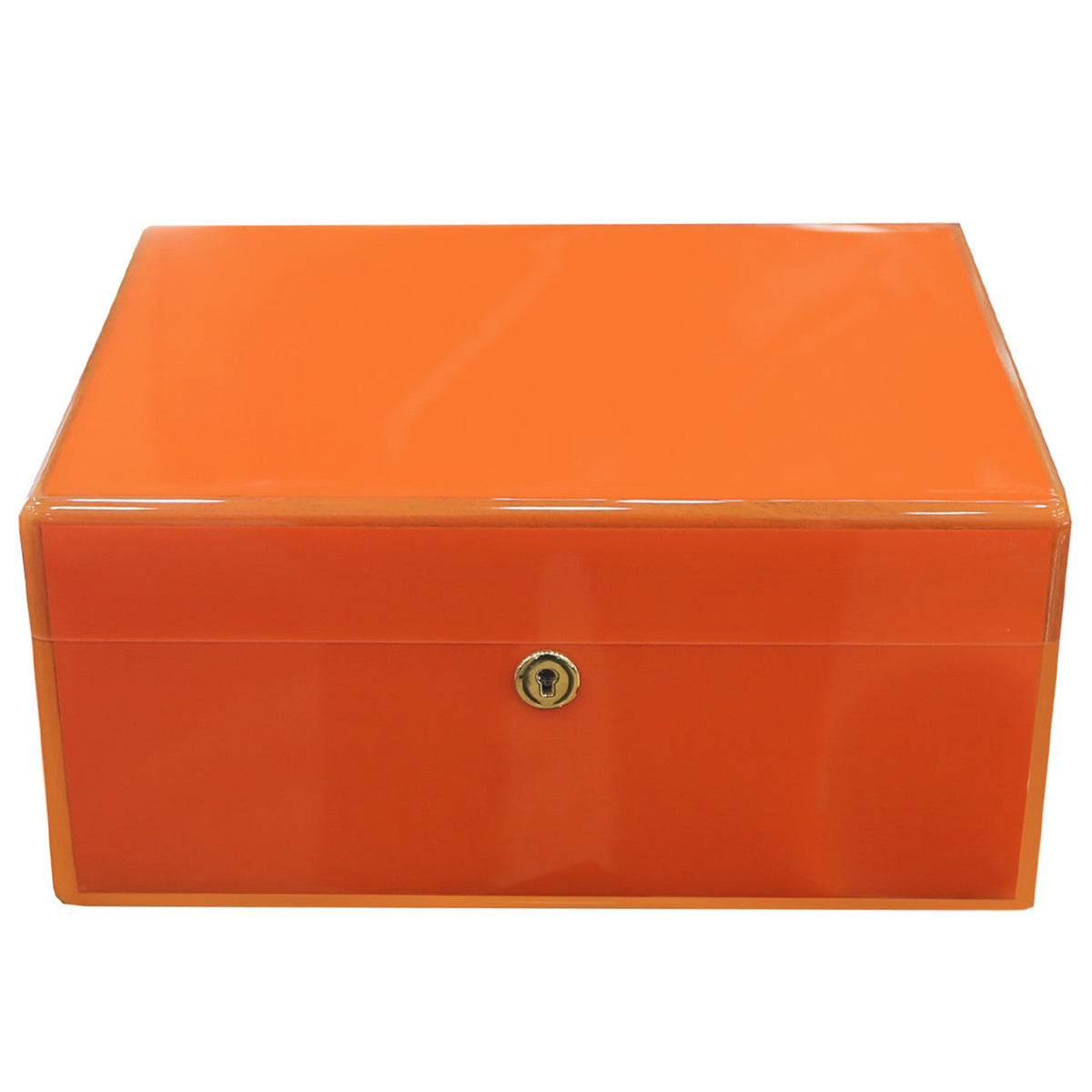
Every cigar leaves our walk-in humidor in Yuma, Arizona, and every online order ships with a Boveda humidity pack. Visit us at 1651 S Arizona Ave in Yuma, or call 928-276-3500. Shop Boveda and humidification, cigar humidors and cigar cases and travel humidors. Pictured: the Diamond Crown Limited Edition Pop Art 75-Cigar Humidor. For how long cigars keep, see how long do cigars last?
$9.99 flat shipping, free on orders of $125 or more.
Live somewhere warm and humid? Our shipping guides for Florida, Hawaii and Puerto Rico include storage notes for damp air.
Frequently asked questions
What is the difference between cigar mold and plume?
Plume is a fine white powder that brushes off without leaving a mark, and Cigar Aficionado says it is not harmful for your cigars. Mold is fuzzy or raised, white or colored, can smell musty and leaves a stain when brushed off.
Is plume on a cigar good?
Holt's and Cigar Advisor describe plume as a sign of good aging, and Cigar Aficionado says it is not harmful for your cigars. Bespoke Unit disagrees, calling plume largely a myth.
Can you smoke a cigar with mold on it?
Cigar Aficionado says a cigar with mold on its foot should not be smoked, and Boveda and Holt's say to throw out any cigar with mold.
Can white mold on a cigar be cleaned off?
Boveda says mold is irreversible, and Holt's says to toss a cigar with even a trace. Cigar Advisor says that, according to some sources, light white mold can be wiped off with alcohol, but says to throw out any cigar with green or blue mold or with mold in the foot.
What humidity causes cigar mold?
Sources differ: Cigar Advisor puts the risk above 70% RH in one article and at 75% in another, Boveda above 72%, Holt's above 72% and 72°F, JR Cigars above 75%, and Vigilant above 80%. Heat raises the risk.
How do you clean mold out of a humidor?
Holt's method is to sand the affected wood lightly with #150-grit sandpaper, wipe it with isopropyl alcohol without soaking it, wipe it with distilled water, let it dry for about a day, re-season it to about 70% RH and wait at least two weeks before restocking.
What do tobacco beetle holes look like?
Tiny round holes about the size of a pinhole, sometimes with little tunnels in the cigar and loose tobacco dust nearby, per Cigar Aficionado and Holt's.
At what temperature do tobacco beetles hatch?
Cigar Aficionado says above 72°F, and Tobacconist University says about 73°F, a figure halfwheel also cites. Cigar Aficionado recommends keeping a humidor around 70°F, and Holt's and Cigars International say not to go above 70°F.
How long do you freeze cigars to kill tobacco beetles?
Three days is the most common advice, from Cigar Aficionado, Holt's, JR Cigars, Tobacconist University and Cigars International, followed by a day in the refrigerator before the cigars go back in the humidor.
What is a cigar mold in cigar making?
A slotted form, traditionally wooden and now often plastic, that cigar makers use to shape a finished bunch. Cigar Aficionado says bunches are usually pressed in it for 30 to 45 minutes.
Where can I buy a humidor or Boveda packs in Yuma, AZ?
At Sun of a Gun Cigars & Spirits, 1651 S Arizona Ave, or online in our Boveda and humidification and cigar humidors collections. Call 928-276-3500.
Sources: Cigar Aficionado glossary ("Mold," "Plume," "Tobacco Beetle," "Humidor"), "Fighting Tobacco Beetles" (David Savona, July 2000) and "Top 10 Most Asked Questions About Cigars" (July 2010); Boveda, "Your Guide to Mold on Cigars: Can Cigars Get Moldy?" (April 2024), Boveda help center and Boveda blog (2025); Holt's Clubhouse, "Cigar Plume vs. Cigar Mold" (2018, updated 2026), "Cleaning Humidor Mold" (2022), "Cigar/Tobacco Beetles: How to Spot & Get Rid of Them" (2018) and "Can You Freeze Cigars?" (2020); Famous Smoke Shop's Cigar Advisor, "Cigar Bloom vs. Mold" (2010), "Is It Plume or Mold?" (2013), "Fighting and Removing Mold in a Cigar Humidor" (2013), "How to Keep Your Cigars Safe from Humidor Mold" (2016) and "The Cigar Advisor Guide to Tobacco Beetles" (2022); JR Cigars Blending Room (2015, 2020, 2022); Cigar World, "An Expert Guide to Cigar Mold" (2021); Vigilant, "What Is Bloom and What Is Mold?" (2021); Bespoke Unit, "What Is Cigar Plume? Cigar Mold Vs Plume" (2022); University of Florida/IFAS, "Cigarette Beetle" (EENY-227); Clemson Cooperative Extension, "Cigarette Beetles" (HGIC 2413); Tobacconist University, tobacco beetle FAQ; halfwheel; Cigars International, "Tobacco Beetles."