Short answer: every cigar is three kinds of leaf (filler, binder and wrapper) rolled into a shape and finished with a cap. Nearly all cigar vocabulary describes one of those leaves, the shape it takes, how it was grown, cured and aged, or how it smokes and keeps. Below, 88 cigar terms from A to Z, each defined in a sentence or two, with links to cigars in our humidor that show the term in practice.
New to cigars? Start with how to smoke a cigar.
A
Aging: The rest tobacco takes after fermentation, first as leaf in bales and later as finished cigars in a cedar room, so harsh notes fade and flavors settle. Padrón Family Reserve is made from tobacco aged ten years.
Allocation: A maker decides how many boxes of a cigar each authorized shop receives, and when; no shop can buy more by paying more. See rare and allocated cigars and how Opus X allocation works.
Añejo and añejamiento: Spanish for aged and aging. On a band, añejo signals extra rest for the leaf or the finished cigar; Arturo Fuente Añejo wears a Connecticut Broadleaf wrapper that rests in cognac barrels.
B
Band: The printed paper ring near the head that names the brand and line, called anilla in Spanish. Let the cigar warm before removing it so the wrapper does not tear.
Belicoso: A shorter cigar with a tapered head, usually 5 to 5½ inches with about a 50 ring. See torpedo and figurado cigars.
Binder: The leaf wrapped around the filler that holds the bunch together beneath the wrapper. It is chosen for strength and burn more than looks; Cuban usage calls it capote.
Body: How full and weighty the flavor feels; strength describes the nicotine. Browse mild, medium and full-bodied cigars.
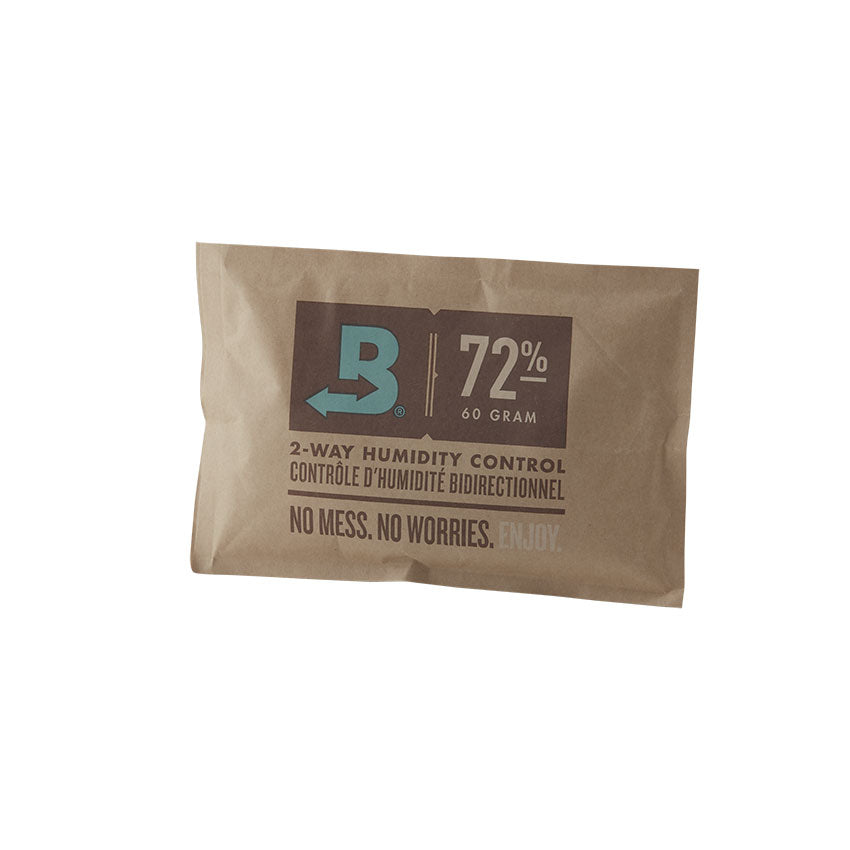
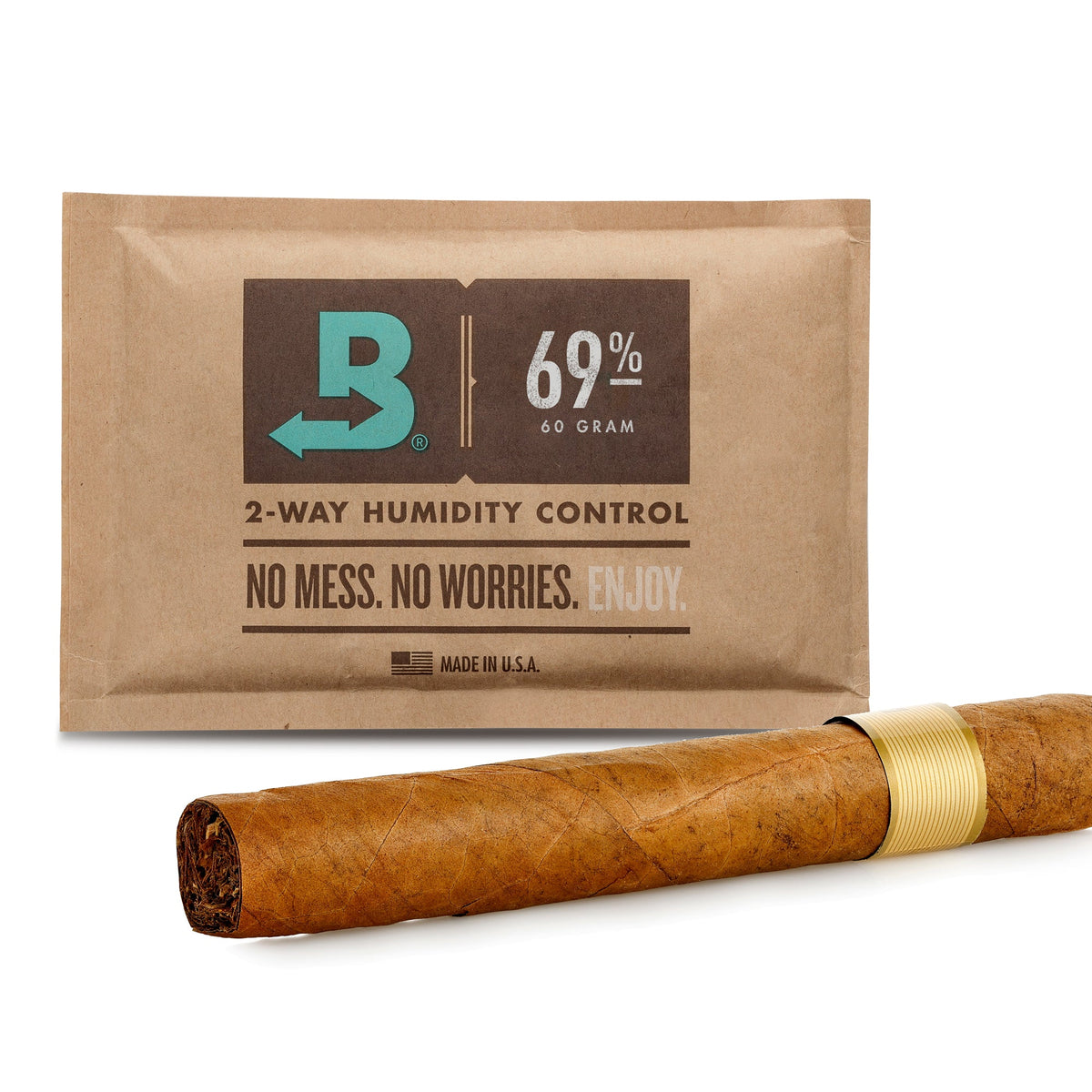
Boveda: Two-way humidity packs that release or absorb moisture to hold a set relative humidity. Every order ships with a Boveda humidity pack; see Boveda packs and our Boveda guide.
Box-pressed: A cigar pressed into a squared shape, either in its box or in a press before boxing. Padrón's 1964 Anniversary Series and 1926 Serie are both box-pressed; see box-pressed cigars.
Bunch: The filler leaves gathered and rolled inside the binder before the wrapper goes on. The worker who makes it is the buncher, or bonchero.
Burn line: The edge where the cigar is burning. An even line points to sound construction and a steady pace of puffing.
C
Cameroon: A thin, toothy wrapper from the African country of the same name, known for a sweet, gently spicy character. See Cameroon cigars.
Canoeing: When one side of the cigar burns faster than the other and leaves a trough. A brief touch of flame on the lagging side usually evens it out.
Cap: The small piece of wrapper leaf glued over the head to seal it. Some makers finish it with three layers, a triple cap, or with a twisted pigtail.
Cedar: Spanish cedar lines most humidors and cigar boxes; it holds moisture and adds a light aroma. Thin strips of it, called spills, are used to light cigars.
Chaveta: The flat, rounded blade a roller uses to trim leaf and shape the cap.
Churchill: A long, classic parejo, typically 7 x 47, named for Winston Churchill. See Churchill cigars.
Cigar of the Year: The top spot on Cigar Aficionado's annual Top 25 list. Award winners in our humidor are gathered on Cigar of the Year & Top 25 Cigars.
Cigarillo: A small, slim cigar for a shorter smoke, often sold in tins. See cigar tins and cigarillos and our cigarillo guide.
Claro: A light tan wrapper, usually shade grown and picked early. Its green cousin, double claro or candela, is dried quickly with heat to hold the chlorophyll.
Cold draw: A pull on a cut but unlit cigar, used to test the airflow and taste the raw tobacco.
Colorado: A medium brown to reddish-brown wrapper, the middle of the color scale.
Connecticut broadleaf: A thick, veiny leaf grown in full sun in the Connecticut River Valley and a leading choice for maduro wrapper. Liga Privada No. 9 wears it.
Connecticut shade: A pale, silky wrapper grown under cloth tents, first in the Connecticut River Valley and now widely in Ecuador; usually mild and creamy. See Connecticut shade cigars.
Corojo: A Cuban-seed tobacco bred in the 1930s at the El Corojo farm in western Cuba and prized as wrapper. Cuba no longer grows it, but its descendants thrive in Central America. See Corojo cigars.
Corona: The classic parejo, about 5½ to 6 inches long with a 42 to 44 ring. See corona cigars.
Criollo: Spanish for native; a family of traditional Cuban-seed tobaccos now grown across Central America. Liga Privada 10 Aniversario wears a Connecticut Criollo wrapper.
Culebra: Three slim cigars braided together, untied and smoked one at a time; the name is Spanish for snake.
Curing: Drying harvested leaf in barns for several weeks while it turns from green to brown. Fire-cured tobacco dries over smoldering hardwood, the source of the smoky note in Kentucky Fire Cured cigars.
Cutter: The tool that opens the head: a straight (guillotine) cut, a V-cut or a punch. Compare them in our cutter guide or shop cigar cutters.
D
Diamond Crown Cigar Lounge: A designation J.C. Newman gives to a select group of lounges. Sun of a Gun is an official Diamond Crown Cigar Lounge in Yuma, and we carry Diamond Crown cigars.
Draw: How freely air and smoke pass through the cigar. Too tight is called plugged; too loose tends to burn hot and fast.
E
Entubado: A Cuban bunching method in which each filler leaf is rolled into a small tube, keeping air channels open even in a densely packed cigar. Some glossaries spell it entubar.
F
Figurado: Any cigar that is not straight-sided, from pyramids and torpedoes to perfectos and culebras. See figurados.
Filler: The leaves at the core that carry most of the flavor and strength, often blended from several primings and countries; tripa in Cuban usage.
Flavored cigar: A cigar whose leaf, wrapper or tip is infused with flavors such as coffee or vanilla. See flavored cigars and our infused cigar guide.
Foot: The open end of the cigar, the end you light.
G
Galera: The rolling room of a cigar factory, where the torcedores work.
Gordo: A thick cigar with a ring gauge of 60 or more. See gordo cigars.
H
Habano: In Cuba, the word for a Cuban cigar. Elsewhere it names Cuban-seed wrapper grown in countries such as Ecuador and Nicaragua, usually darker and spicier than shade leaf. See Habano cigars.
Head: The closed end of the cigar, which you cut and put to your lips.
Humidor: A box, cabinet or room that keeps cigars at steady humidity, usually lined with Spanish cedar. See cigar humidors and our humidor guide.
Hygrometer: A gauge that reads relative humidity inside a humidor; dial models can drift, so check yours now and then.
L
Lancero: Long and slender, usually 7 to 7½ inches with a 38 to 40 ring, first made in the 1960s at the El Laguito factory for Cohiba. See lancero cigars.
Ligero: Leaves from the top of the plant, which take the most sun. They are thick, oily, slow to burn and the strongest part of a blend, and they give their name to La Flor Dominicana Double Ligero.
Limited edition: A blend made in a fixed quantity or for a fixed period, as opposed to regular production, which a maker keeps rolling year after year.
Long filler: Whole leaves that run the full length of the cigar, the standard in premium handmade cigars.
M
Maduro: Spanish for mature: a wrapper given a longer, hotter fermentation that darkens it to deep brown or almost black. It tends to taste sweeter but is not automatically stronger. See maduro cigars and maduro vs. natural.
Medio tiempo: The rare top two leaves of a sun-grown plant, the thickest and fullest in flavor; not every plant produces them.
N
Natural: The lighter of two wrapper options a maker offers on the same blend; the counterpart to maduro.
Nicaraguan puro: A cigar made entirely of Nicaraguan tobacco, often blending leaf from Estelí, Jalapa and Condega. See Nicaraguan cigars.
O
Oscuro: The darkest wrapper shade, nearly black, sometimes sold as double maduro.
P
Panetela: A long, slim parejo, roughly 5 to 7½ inches with a 34 to 38 ring.
Parejo: Any straight-sided cigar with an open foot and a rounded head, from corona to Churchill.
Perfecto: Tapered at both ends with a swell in the middle. The Arturo Fuente Hemingway line is built on this shape.
Pilón (fermentation): The stacked pile in which cured leaf ferments, heating up on its own as ammonia is driven off and flavor develops. Workers watch the heat inside and rebuild the pile so every leaf ferments evenly; maduro wrapper ferments longer and warmer.
Plume: Also called bloom: a fine white dust of oils that can rise on aged cigars and brushes away without leaving a mark. Mold is different: it has color, often looks fuzzy and stains the wrapper.
Primings: The tiers of leaves on the tobacco plant, and the harvest passes that pick them from the bottom up, a few leaves at a time. Volado, seco, viso and ligero name these tiers.
Purge: Blowing gently back through a lit cigar to clear stale smoke, often just before a relight.
Puro: A cigar whose wrapper, binder and filler all come from one country. Fuente Fuente Opus X is a celebrated Dominican puro, notable because Dominican soil was long thought unsuited to wrapper.
Pyramid: A cigar with a tapered head that widens to an open foot, typically 6 to 7 inches long.
R
Relative humidity: The moisture in the air compared with the most it can hold at that temperature. Cigars keep well at roughly 65 to 72 percent, near 70°F.
Relight: Lighting a cigar again after it goes out. Purge it, toast the foot and light it again; see how to light a cigar.
Retrohale: Letting a little smoke out through the nose to pick up aromas the tongue misses. More in do you inhale cigar smoke?
Ring gauge: A cigar's diameter in 64ths of an inch, so a 50 ring measures 50/64 of an inch. See our cigar sizes and ring gauge chart.
Robusto: A short, thick cigar, typically 5 x 50. See robusto cigars and toro vs. robusto.
S
San Andrés: Wrapper grown in the San Andrés Valley of Veracruz, Mexico, often fermented dark as maduro; Undercrown Maduro uses it.
Seasoning: Bringing a new humidor up to humidity before loading cigars; Boveda uses its 84 percent packs in the empty box for about two weeks.
Seco: Leaves from the middle of the plant, medium in strength and important for aroma.
Shade grown: Tobacco grown under cloth that filters the sun, producing thin, smooth, light-colored wrapper.
Short filler: Chopped leaf used in machine-made and budget cigars; it tends to burn faster and hotter than long filler.
Stalk-cut: Harvesting the whole plant at once and curing the leaves on the stalk rather than picking them by priming. The Liga Privada T52 wrapper is stalk-cut Connecticut Habano.
Stogie: American slang for a cigar, named for the Conestoga wagons of Pennsylvania; our stogie guide traces the word.
Sumatra: Wrapper from Sumatra-seed tobacco, first grown in Indonesia and now often in Ecuador; usually medium brown and gently spicy. See Sumatra cigars.
Sun grown: Tobacco grown in full sunlight, which yields thicker, darker leaf with more flavor and strength. See sun-grown cigars.
T
TAA exclusive: A cigar made for retail members of the Tobacconists' Association of America, a trade group of cigar shops, through its Exclusive Series Program.
Toast: Warming the foot with a flame before lighting, so it catches evenly.
Tobacco beetle: A tiny pest whose eggs can hatch in tobacco kept too warm, leaving pinholes in the wrapper. Keep a humidor below about 72°F.
Torcedor: A cigar roller; torcedora for a woman.
Toro: About 6 inches with a 50 ring, a popular modern size. See toro cigars.
Torpedo: A pyramid-style cigar with a sharper point; in practice the two names overlap.
Tubo: A cigar packed in its own tube, often lined with cedar and handy for travel. See tubo cigars.
Tunneling: When the filler burns faster than the wrapper and leaves a hollow at the lit end, usually a sign the cigar is holding too much moisture.
V
Viso: A filler grade between seco and ligero: stronger and thicker than seco, milder and thinner than ligero.
Vitola: A cigar's size and shape. A factory's working name for a size, the vitola de galera, can differ from the name on the box, the vitola de salida.
Volado: In Cuban usage, the mild leaves at the bottom of the plant, valued for how well they burn. Some glossaries apply the word to the grade between seco and ligero instead.
W
Walk-in humidor: A humidified room you can step into to choose cigars. Ours in Yuma holds the cigars we sell in the lounge and online; see rare cigars in stock now.
Wrapper: The outer leaf, chosen for appearance, texture and flavor and usually the costliest leaf in the cigar; capa in Cuban usage. Browse premium cigars by wrapper.
Frequently asked questions
What are the parts of a cigar?
A cigar is built from three kinds of leaf: filler at the core, a binder that holds it together, and the wrapper on the outside. The closed end you cut is the head, sealed by a cap, and the open end you light is the foot.
What does ring gauge mean?
It is the cigar's width, counted in 64ths of an inch. A robusto with a 50 ring measures 50/64 of an inch across, and a 64 ring would measure a full inch.
What is the difference between ligero, seco and volado?
They describe where a filler leaf grew on the plant. Ligero comes from the top and is the strongest, seco comes from the middle and adds aroma, and volado, in Cuban usage, comes from the bottom and helps the cigar burn.
What is the difference between body and strength?
Body describes how full and rich the flavor feels; strength describes the nicotine. A cigar can be full in body and still moderate in strength, so look at both when you choose.
What does allocated mean for cigars?
The maker decides how many of a release each authorized shop receives and when. A shop cannot buy more by paying more, so when its allocation sells through, that cigar is gone until the next shipment.
Is the white powder on my cigar plume or mold?
Plume, also called bloom, is a fine white dust from the tobacco's oils that brushes off and leaves no mark. Mold has color, often looks fuzzy and stains the wrapper, and a moldy cigar should be discarded.
Sources: Cigar Aficionado and Habanos S.A. glossaries, halfwheel (TAA Exclusive Series), Cigar Coop and our own guides. Last updated October 2026.